
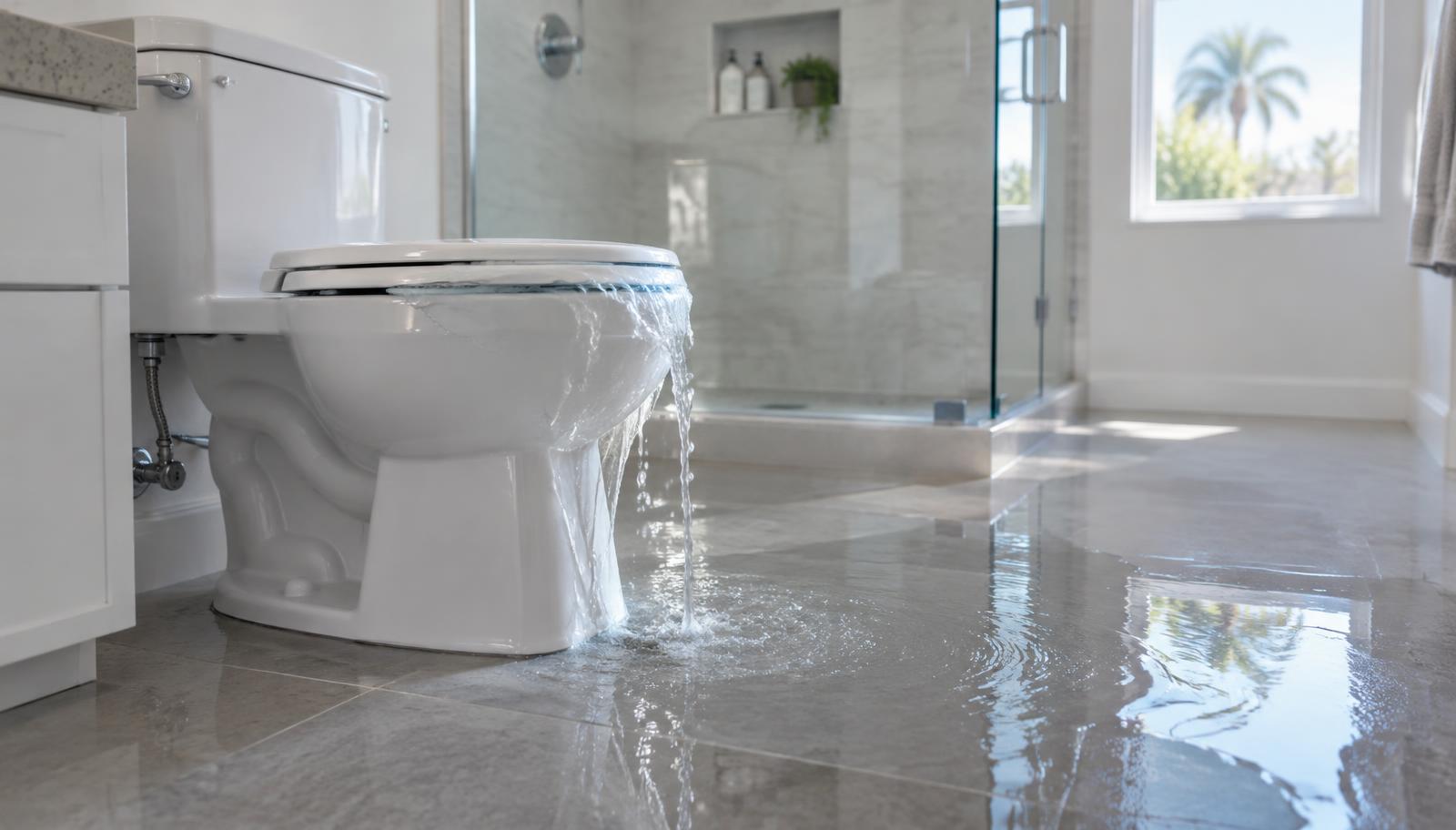
Few things make your stomach drop like watching the water in the toilet bowl keep rising. Sometimes it stops right at the rim. Other times it spills over, runs across the bathroom floor, and starts heading for the hallway carpet. If that just happened in your home, toilet overflow cleanup in Simi Valley comes down to two questions: what kind of water is on the floor, and how far did it go? This guide walks you through what to do in the first few minutes, what to avoid, and when it makes sense to bring in a professional.
Not All Toilet Overflows Are the Same
The water that comes out of a toilet can range from fairly clean to seriously contaminated, and that difference shapes everything about the cleanup.
If the tank overflows or a supply line leaks, the water is coming straight from your plumbing and has not touched the bowl. That is usually treated like any other clean water leak. Once water spills out of the bowl itself, though, it is no longer considered clean. And if the overflow involves waste, or water is backing up from the drain line, it is treated as sewage, also called black water, which carries bacteria and other pathogens.
Water also changes over time. Even fairly clean water can pick up contamination as it sits on floors, soaks into carpet, and travels under baseboards.
What to Do First After a Toilet Overflow
Whether it is a small spill or a full backup, these steps help limit the damage and keep your household safe.
1. Stop the Water
Turn the shutoff valve behind the toilet clockwise until it stops. If the valve is stuck, lift the tank lid and raise the float to stop the tank from refilling. If several drains are backing up at once, the problem may be in the main line, so stop using water throughout the house.
2. Keep People and Pets Away
Close the bathroom door if you can and keep kids and pets out of the area. Avoid walking through the water and tracking it into other rooms.
3. Watch for Electrical Hazards
If water is near outlets, cords, or a space heater, stay out of the water. Only shut off breakers if you can reach the panel without stepping into wet areas.
4. Take Photos and Video
Before you clean anything, document the toilet, the water on the floor, and any damaged flooring, cabinets, or belongings. These records can be helpful if you decide to file an insurance claim.
5. Do Not Flush or Run Other Drains
If you suspect a drain or sewer line issue, hold off on flushing toilets, running the dishwasher, or doing laundry. Adding water can push more of it back up.
What Not to Do
- Do not use a household vacuum or carpet cleaner to pick up the water. They are not built for it and can spread contamination.
- Do not assume bleach and a mop make contaminated carpet safe. Porous materials that absorb sewage often need to be removed.
- Do not ignore water that ran under the vanity, baseboards, or into an adjoining room. It can stay hidden long after the floor looks dry.
- Do not wait days to see if a musty smell goes away on its own.
When a Toilet Overflow Needs Professional Cleanup
A small spill of clean tank water on a tile floor can often be handled with towels and good airflow. Professional toilet overflow cleanup is the safer choice when:
- The overflow contained waste or came back up from the drain.
- Water reached carpet, rugs, or wood flooring.
- Water seeped under the toilet, vanity, or baseboards, or into a wall.
- The bathroom is upstairs and you notice stains or dripping on the ceiling below.
- More than one drain is backing up, which can point to a sewer line problem.
- You notice a lingering odor or musty smell after the floor seems dry.
How Professional Toilet Overflow Cleanup Works
Every overflow is different, but the process generally follows the same path.
1. Assessment and Moisture Checks
Technicians figure out what type of water is involved and use moisture meters to see how far it traveled. Our guide on why moisture mapping matters after water damage explains this step in more detail.
2. Containment and Extraction
When contamination is involved, the area is contained to help keep it from spreading to clean parts of the home. Standing water is then extracted with professional equipment.
3. Removing Materials That Cannot Be Saved
Carpet, padding, and some drywall or baseboards that absorbed contaminated water often need to come out. Hard, non-porous surfaces can usually be cleaned and disinfected.
4. Cleaning, Disinfection, and Odor Removal
Affected surfaces are cleaned and disinfected with professional-grade products, and odors are addressed at the source instead of being covered up.
5. Drying and Repairs
Air movers and dehumidifiers dry the subfloor, walls, and framing, with moisture readings tracked until materials are dry. Then damaged flooring, baseboards, and drywall can be repaired.
Why Fast Cleanup Matters
Bathrooms already hold a lot of humidity, and water that gets under a toilet or vanity can sit there quietly. Left alone, that moisture can lead to swollen subflooring, loose tiles, and mold growth. Our article on how fast mold grows after water damage explains why drying quickly matters, and our guide to the signs of hidden water damage in Simi Valley homes covers what to watch for in the weeks that follow.
If the overflow involved sewage, the health side matters too. Our article on sewage backup health risks explains why contaminated water calls for proper protective equipment and disinfection.
Will Insurance Cover a Toilet Overflow?
It depends on your policy and on what caused the overflow. Some policies treat a sudden, accidental overflow differently than damage from a slow leak, and many standard policies limit or exclude sewer and drain backup unless a specific endorsement was added. Mold coverage is often limited as well. Your insurance company makes the final decision, so it is worth reviewing your policy or calling your agent with specific questions. This is general information, not legal advice.
What we can do is document the damage with photos, moisture readings, and a written scope of work, and communicate with your adjuster about the restoration work. You also get to choose who restores your home, which our article on whether you have to use your insurance company's vendor in California explains.
Toilet Overflow Questions Simi Valley Homeowners Ask
1. Is toilet overflow water dangerous?
It can be. Clean water from the tank or supply line is generally low risk at first, but water that spills from the bowl is considered contaminated, and any overflow involving waste is treated as sewage. When in doubt, treat it as contaminated and avoid contact.
2. Can I clean up a toilet overflow myself?
A small spill of clean water on tile can often be handled at home. If the water contained waste, reached carpet, or seeped under the floor or into walls, professional cleanup and drying is the safer choice.
3. Do you fix the clog or the toilet?
Our focus is the damage: extraction, cleaning and disinfection, drying, and repairs to affected materials. A plumber typically handles the clog, the toilet, or the drain line itself.
Toilet Overflow Cleanup in Simi Valley and Ventura County
Action Restoration provides 24/7 toilet overflow cleanup, sewage cleanup, water extraction, structural drying, and repairs for homes in Simi Valley and nearby communities, including Moorpark, Thousand Oaks, Camarillo, Chatsworth, and Northridge. If a toilet has overflowed in your home, call Action Restoration at 805-857-9491 for a free inspection. Insurance work is documented and billed after the work is completed, and cash-friendly pricing is available after the inspection for out-of-pocket jobs. When disaster strikes, it's time for Action.
Need Help Now?
Water damage does not wait. Neither do we.
Call for a free inspection and 24/7 emergency dispatch across Simi Valley and Ventura County. Insurance work is documented and billed after the work is completed.
Related Services
Sewage Cleanup
Safe extraction, disinfection, and odor removal.
Learn moreWater Damage Restoration
Extraction, structural drying, and moisture monitoring.
Learn more24/7 Emergency Response
Crews dispatched day or night.
Learn moreMold Remediation
Containment and removal when moisture lingers too long.
Learn moreInsurance Documentation
Photos, readings, and a written scope.
Learn moreFire & Smoke Restoration
Cleanup, odor removal, and drying after a fire.
Learn moreKeep Reading
Water Heater Leak Cleanup in Simi Valley: What to Do When Your Tank Starts Leaking
A leaking water heater can soak a garage, closet, or hallway fast. Here is how to shut it down safely, what to skip, and how cleanup and drying work.
Burst Pipe Cleanup in Simi Valley: What to Do in the First Few Hours
A burst pipe can soak a room in minutes. Here is what to do right away, what to avoid, and how cleanup and drying actually work.
IICRC Certified Firm
Certified in Water Damage Restoration and Mold Remediation. The IICRC is the industry standard homeowners, property managers, and adjusters look for.

 CSLB #1159713