
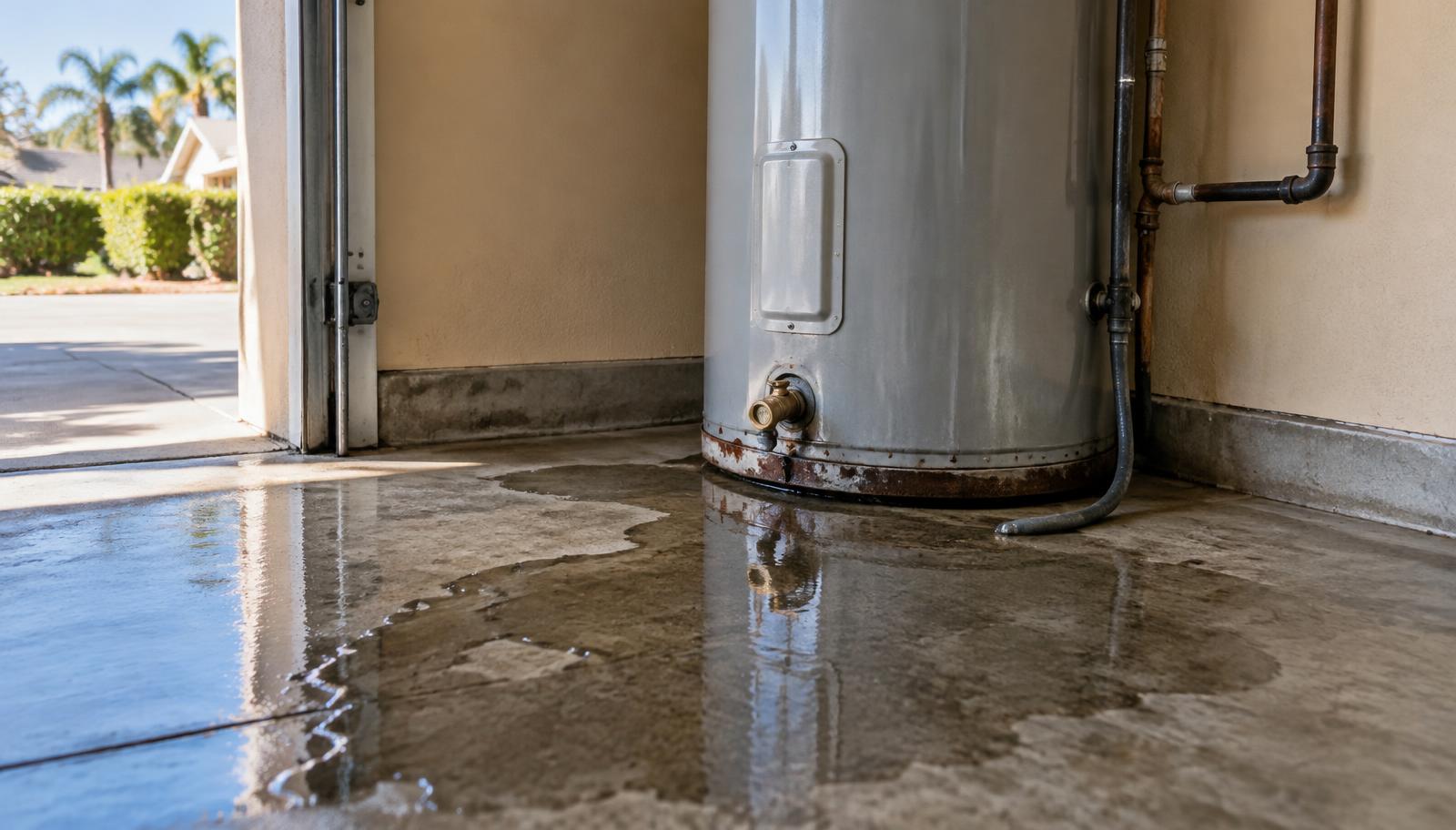
Most of us never think about the water heater until something goes wrong. Maybe you step into the garage and your sock hits a puddle, or you notice a dark stain spreading across the carpet outside a hallway closet. If that sounds familiar, water heater leak cleanup in Simi Valley comes down to a few quick moves: shut off the water and the power, keep the water from spreading, and get wet materials drying before the damage grows. This guide walks you through what to do first, what to avoid, and what professional cleanup looks like.
Why Water Heaters Leak
Tank water heaters hold a lot of water under pressure, day and night, for years. Over time, sediment settles at the bottom of the tank, metal parts corrode, and fittings loosen. Common sources of a leak include the drain valve near the bottom, the temperature and pressure relief valve on the side or top, the supply connections on top, and the tank itself once rust works its way through.
Location matters too. In many Simi Valley homes the water heater sits in the garage, but plenty of houses have one tucked into an interior closet, a laundry room, or even an attic. A leak inside a closet can quietly soak drywall, baseboards, and flooring in the rooms next to it.
What to Do First After a Water Heater Leak
If you find water around your water heater, these steps help limit the damage and keep everyone safe.
1. Turn Off the Power or Gas
For an electric unit, switch off the water heater breaker at the panel, as long as you can reach it without stepping into water. For a gas unit, turn the gas control knob to the off or pilot position. If you smell gas, leave the house and call your gas utility from outside.
2. Shut Off the Cold Water Supply
Look for the valve on the cold water line at the top of the tank and turn it clockwise until it stops. If that valve will not budge, shut off the main water valve to the house.
3. Be Careful With Hot Water
The water in the tank and on the floor may still be very hot. Give it time to cool and keep kids and pets away from the area.
4. Take Photos and Video
Before moving anything, document the water heater, the water on the floor, and any damaged walls, flooring, or belongings. These records are often helpful if you decide to file an insurance claim.
5. Move Belongings Out of the Way
Garages and closets tend to hold boxes, paperwork, and stored items. Move anything wet or in the path of the water to a dry area, and pull cardboard boxes off the floor before they soak through.
6. Call for Help
A plumber or water heater technician handles the repair or replacement. A restoration team handles the water that already escaped, including extraction, drying, and repairs to damaged materials.
What Not to Do
- Do not use a household vacuum to pick up the water. It is not built for it and can be a shock hazard.
- Do not touch the relief valve or try to drain the tank if you are not sure how. Hot water and pressure can cause injuries.
- Do not assume the floor is dry because the surface feels dry. Water can wick into drywall and travel under flooring and baseboards.
- Do not leave wet boxes or rugs sitting on the floor.
- Do not wait days to see if a musty smell goes away on its own.
How Professional Water Heater Leak Cleanup Works
Water heater leak cleanup generally follows the same path from first call to final check.
1. Inspection and Moisture Mapping
Technicians use moisture meters and thermal imaging to see how far the water traveled, including behind walls next to a closet unit and under nearby flooring. Our guide on why moisture mapping matters after water damage explains this step in more detail.
2. Water Extraction
Standing water is removed with professional extraction equipment, which pulls far more water out of carpet, pad, and porous surfaces than towels or a shop vac.
3. Removing Materials That Cannot Be Saved
Soaked baseboards, swollen cabinet panels, wet carpet pad, or the lower section of drywall may need to come out so the framing behind them can dry properly.
4. Structural Drying and Dehumidification
Air movers and dehumidifiers are placed based on the layout and moisture readings. Readings are checked over the following days and equipment is adjusted until materials reach a dry standard.
5. Repairs and Restoration
Once everything is confirmed dry, damaged drywall, baseboards, and flooring can be repaired so the space is back to normal.
Water Heater Leak Cleanup and Mold Prevention
Water heater closets are often small, dark, and warm, which makes them a comfortable place for mold once moisture sets in. Under the right conditions, mold can begin to grow within 24 to 48 hours on wet drywall, wood, and carpet. Our article on how fast mold grows after water damage explains why drying quickly matters so much.
Slow leaks are especially sneaky. A small drip from a fitting can go on for weeks before anyone notices a stain or a soft spot in the floor. Our guide to the signs of hidden water damage in Simi Valley homes covers what to watch for. If you already notice a musty smell or discoloration, a mold inspection may be the right next step.
Will Insurance Cover a Water Heater Leak?
It depends on your policy and on what caused the leak. Many homeowners policies treat sudden, accidental water damage differently than damage from a slow leak or worn-out equipment, and the water heater itself may be handled differently than the floors and walls around it. Mold coverage is often limited or excluded. Your insurance company makes the final decision, so it is worth reviewing your policy or calling your agent with specific questions. This is general information, not legal advice.
What we can do is document the damage with photos, moisture readings, and a written scope of work, and communicate with your adjuster about the restoration work. You also get to choose who restores your home, which our article on whether you have to use your insurance company's vendor in California explains.
Water Heater Leak Questions Simi Valley Homeowners Ask
1. Is a small puddle under my water heater a big deal?
It can be an early warning sign. Sometimes it is condensation or a loose fitting, but it can also mean a valve or the tank is starting to fail. Have the unit checked, and keep an eye on nearby walls and flooring for stains or swelling.
2. Can I clean up a water heater leak myself?
A small amount of water on a sealed garage floor can often be handled with towels and good airflow. If water reached carpet, drywall, cabinets, or flooring in the house, professional extraction and drying is the safer choice.
3. Do you replace the water heater?
Our focus is the water damage: extraction, drying, cleanup, and repairs to affected materials. A plumber or water heater technician typically handles the repair or replacement of the unit itself.
Water Heater Leak Cleanup in Simi Valley and Ventura County
Action Restoration provides 24/7 water heater leak cleanup, water extraction, structural drying, and repairs for homes in Simi Valley and nearby communities, including Moorpark, Thousand Oaks, Camarillo, Chatsworth, and Northridge. If your water heater is leaking, call Action Restoration at 805-857-9491 for a free inspection. Insurance work is documented and billed after the work is completed, and cash-friendly pricing is available after the inspection for out-of-pocket jobs. When disaster strikes, it's time for Action.
Need Help Now?
Water damage does not wait. Neither do we.
Call for a free inspection and 24/7 emergency dispatch across Simi Valley and Ventura County. Insurance work is documented and billed after the work is completed.
Related Services
Water Damage Restoration
Water heater leak cleanup, extraction, and structural drying.
Learn more24/7 Emergency Response
Crews dispatched day or night for active leaks.
Learn moreMold Remediation
Containment and removal when moisture lingers too long.
Learn moreInsurance Documentation
Photos, readings, and a written scope.
Learn moreSewage Cleanup
Safe cleanup when a drain or sewer line backs up.
Learn moreFire & Smoke Restoration
Cleanup, odor removal, and drying after a fire.
Learn moreKeep Reading
Toilet Overflow Cleanup in Simi Valley: What to Do and When to Call a Pro
Not every toilet overflow is the same. Here is how to tell clean water from contaminated water, what to do right away, and when cleanup needs a professional.
Burst Pipe Cleanup in Simi Valley: What to Do in the First Few Hours
A burst pipe can soak a room in minutes. Here is what to do right away, what to avoid, and how cleanup and drying actually work.
IICRC Certified Firm
Certified in Water Damage Restoration and Mold Remediation. The IICRC is the industry standard homeowners, property managers, and adjusters look for.




 CSLB #1159713